Bedding · Bedroom design
Low-Footboard Beds: How to Choose a Frame for Easier Access
A low footboard can make a bedroom feel more open and the bed easier to approach. The best frame is not simply the one with the shortest end panel: it is the one that balances clear passage, mattress fit, support, and a comfortable place to sit or sleep.
In a bedroom, a few inches can change the way the whole room works. A tall footboard creates a defined silhouette, lending a bed a formal, almost architectural presence. A low one, by contrast, allows the eye to travel farther and leaves the foot of the mattress feeling less enclosed. That visual lightness can be especially welcome in a compact room, in a space with a narrow route around the bed, or wherever an unobstructed approach is a priority.
The phrase “low-footboard bed” usually describes a frame whose footboard sits lower than its headboard, or lower than the mattress surface. It does not necessarily mean the bed itself is low to the floor. That distinction matters: a low footboard may improve access at the foot while the mattress remains at a comfortable seated height. Choosing well means considering the frame, mattress, foundation, room dimensions, and the everyday movements the bed needs to accommodate.
What a low footboard changes
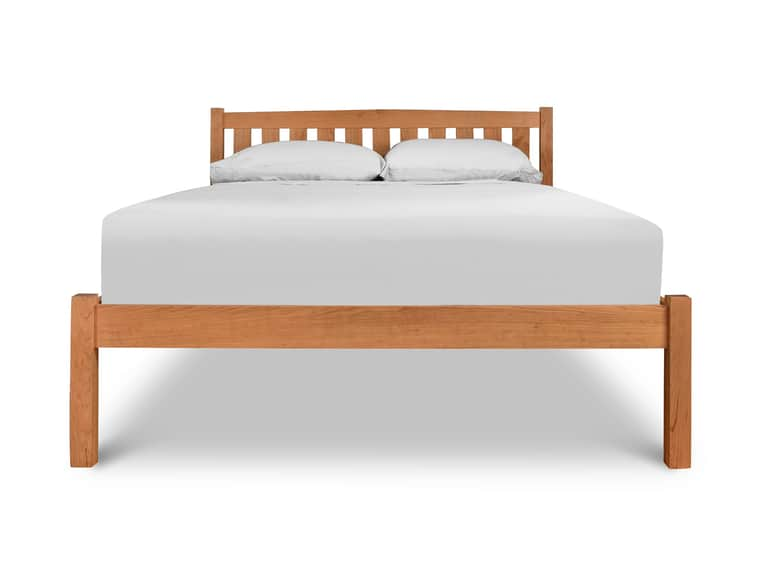
A footboard is both a visual boundary and a physical element at the end of the bed. When it rises significantly above the mattress, it can frame bedding beautifully, but it may also make the bed feel more enclosed. A lower panel—or a frame with no raised footboard—softens that boundary. The result is often a more relaxed profile, with extra openness around the foot of the mattress.
That openness can help in several ways. It may make it easier to walk toward the bed, sit down at its end, or change sheets without reaching over a high panel. In a tight layout, a lower profile can also reduce the sense that the bed is blocking the room. These are practical advantages, not guarantees: the frame’s overall length and the available floor space still determine whether there is enough room to move comfortably.
A low footboard can also affect the room’s visual balance. It draws less attention than a tall, solid end panel and may suit a pared-back interior, a low ceiling, or a bedroom where furniture already competes for visual space. In a more traditional scheme, a modestly raised footboard can retain a tailored outline without dominating the bed. The ideal proportion is a matter of both access and taste.
Begin with the room, not the catalogue
Before comparing bed frames, measure the room and map the space around the bed. Record the length and width of the area, the positions of doors and windows, and any furniture that must remain in place. Then measure the bed’s full outside dimensions, rather than relying only on the mattress size. Rails, posts, and footboard construction can extend beyond the mattress footprint.
Think through the route you use most often. Can you approach the bed from the side? Is there a clear path from the doorway? Do drawers, closet doors, or a bedroom door need room to open? A low footboard may make the end of the bed feel more accessible, but it cannot create floor space where there is none. A sensible layout accounts for the whole path of movement, not just the height of one panel.
If the bed will sit near a wall, radiator, window, or built-in storage, check that the frame and bedding will not interfere with access or operation. Consider where a bench, laundry basket, or bedside table will go as well. These details are easy to overlook when a frame is viewed in isolation, yet they determine whether the finished bedroom feels effortless or cramped.
Height is a combination of parts
The finished height of a bed is made up of more than the frame. It includes the support system—such as slats or a foundation—and the mattress itself. If you use a mattress pad or topper, include that layer in your estimate. A mattress that is thicker than expected may rise close to or above a low footboard, changing the frame’s appearance and the way sheets sit.
Before purchasing, check the frame’s stated dimensions and compare its mattress-support height with the thickness of your mattress and any planned layers. Manufacturers may describe these measurements differently, so confirm precisely what is being measured: the height of the footboard, the platform or slats, the top of the mattress support, or the overall frame. When the details are unclear, ask for a dimensioned specification rather than guessing from a photograph.
The relationship between mattress and footboard is partly aesthetic. A low panel can sit below the mattress top for a distinctly open look, or rise closer to the mattress edge for a more framed appearance. Neither treatment is automatically better. What matters is that the proportions feel intentional and that the bedding does not bunch awkwardly against the panel.
Fit the mattress to the frame
Start by confirming the mattress size the frame is designed to accept. A mattress should fit the support surface as specified by the manufacturer; a frame that is too small or too large can leave an unsuitable gap, shift during use, or interfere with the intended support. Pay attention to the mattress dimensions, not only the familiar label such as queen or king, since dimensions and naming conventions can vary by region and product.
Next, check what kind of support the frame requires. Some platform frames are designed to support a mattress directly, while others are made to work with a foundation or another specified base. The slat spacing, center support, and weight limits should meet the mattress maker’s requirements. A frame’s attractive profile cannot compensate for an incompatible support system.
Thickness deserves a separate check. A tall mattress can visually overwhelm a low footboard or conceal much of its design. A thinner mattress may preserve the frame’s proportions but produce a lower sleeping surface. Consider the total height you want from floor to mattress top, then calculate it using the frame support height and mattress thickness. If you already own a mattress, measure it on a flat surface and include any topper that will remain in use.
Everyday access and seated comfort
“Easier access” can mean different things in different homes. One person may want a clear route to make the bed; another may value an unobstructed place to sit while putting on shoes. Someone using mobility aids may need more turning space and a carefully considered bed height. A low footboard can remove one obstacle, but it should not be treated as a complete accessibility solution.
For a comfortable transition from standing to sitting, think about the mattress height in relation to the person using it. The feet should be able to reach the floor when seated, and the bed should feel manageable to get into and out of. Body proportions, balance, mobility, and personal preference all differ. Where a specific accessibility need is involved, evaluate the full layout and consult an appropriate occupational or accessibility professional when useful.
A low footboard may help someone sit at the end of the bed without leaning over a tall panel. Still, consider the firmness and stability of the mattress edge, as well as whether the bed frame is designed to tolerate that kind of use. The footboard itself is not necessarily a sitting surface. If you expect to perch there regularly, look for a separate bench designed for seating rather than treating a decorative frame component as furniture.
Check construction and support
A bed frame should feel secure when assembled and in use. Look for clear information about materials, joinery, center support, and the mattress-support system. If the bed is wide, confirm whether it includes a center rail or legs and follow the assembly instructions carefully. A frame that shifts, creaks, or lacks the support required for the mattress may affect comfort regardless of its footboard design.
Wood frames offer a range of visual characters, from crisp and contemporary to traditional and detailed. Metal and upholstered designs create different effects and require their own care considerations. Whatever the material, inspect the points where rails meet the headboard and footboard, and establish whether the frame can be disassembled if it needs to pass through a narrow stairwell or doorway.
A useful example is the Bennington Bed with Low Footboard, a solid-wood platform design with straight traditional lines and a subtle peak in the headboard and footboard. Its described low-footboard construction makes it relevant to shoppers comparing a more open bed profile. As with any frame, check its current dimensions and support specifications against your mattress and room before deciding whether it is the right fit.
Make the silhouette work with the bedding
The frame is only one part of the finished bed. Sheets, blankets, quilts, and coverlets all influence how much of the footboard remains visible. A long bedspread may conceal a low panel entirely, while a neatly tucked duvet or a shorter coverlet can keep the frame’s profile in view. If the low footboard is central to the look you want, plan the bedding layers with that proportion in mind.
A bed skirt is another consideration. It can create a finished, tailored edge, but its drop should suit the frame and the distance from the mattress to the floor. On a low-profile bed, excessive fabric may gather or drag; a carefully measured length looks more considered. Before ordering textiles, take measurements of the bed as assembled and confirm how the chosen bedding is meant to hang.
Keep practical access in view as well. If you store baskets or other items beneath the bed, measure the clearance from floor to frame and account for the legs, center support, and any bed skirt. A low footboard does not necessarily mean generous under-bed clearance. These are separate dimensions, and confusing them can lead to a frame that looks right but does not accommodate the storage or cleaning routine you had in mind.
A concise checklist before you buy
A considered choice comes down to confirming a handful of measurements and matching them to daily habits. Before committing to a frame, review the following:
- Measure the room and the full route around the bed, including door swings and nearby furniture.
- Compare the frame’s outside dimensions with the available floor space, not just the mattress size.
- Confirm the mattress size and thickness the frame is designed to accommodate.
- Add the height of any foundation, support system, mattress pad, or topper to estimate the finished bed height.
- Check slat spacing, center support, and other requirements against the mattress manufacturer’s guidance.
- Consider how the mattress height will feel when sitting down, standing up, and making the bed.
- Measure under-bed clearance separately if cleaning access or storage matters.
- Review assembly instructions, material details, and whether the components can pass through the home’s access points.
- Choose bedding lengths and layers that complement the footboard rather than obscuring it unintentionally.
Common missteps to avoid
The first is treating “low footboard” as a precise measurement. The term communicates a general design, but actual height and shape differ from one frame to another. Read dimension details and request clarification if the published specifications do not distinguish the footboard height from the support height.
The second is measuring only the mattress. A frame may extend beyond it, and the headboard may need additional clearance from a wall or window. Measure the assembled footprint wherever possible. If the bed will be delivered in pieces, check both the assembled dimensions and the size of the largest components.
The third is choosing a frame before considering the mattress. A change in mattress thickness can alter the finished bed height and the way a low panel reads. Decide whether the frame is being paired with a mattress you already own or a future purchase, then verify compatibility rather than assuming standard dimensions will settle every detail.
Finally, do not let the appeal of an open silhouette distract from support and stability. A beautiful frame should still suit the mattress, the room, and the way the bed will be used. The most successful choice feels composed in the space and dependable in daily life.
The final measure is how the room feels
A low-footboard bed can bring a quieter, more expansive feeling to a bedroom. It offers a less imposing outline, a clearer view across the space, and—when the surrounding layout supports it—a more direct approach to the mattress. But no single frame height guarantees comfort. Mattress fit, total bed height, support, circulation, and personal needs all belong in the decision.
Measure first, compare the finished proportions, and picture the small rituals of the room: walking past the bed, changing the sheets, sitting down at the end of the day. The right frame is the one that makes those movements feel natural while giving the bedroom the visual ease you were looking for. Low-footboard design is at its best when openness is not merely an aesthetic effect, but a practical part of how the room lives.